I liked the stories. The language, the sentence structure is what I had trouble with.
Unnecessarily complicated sentences made it hard to connect and I just couldn't get past the artificially constructed sentences as opposed to heartfelt writing.
Or may be it's just me and my problem with lack of comfort or not being in touch for so long with the language? ¯\_(ツ)_/¯
"Girl children find it hard to hate a mother who is already being humiliated by their father. For them, it is unthinkable."
One extra star just for the last story, which felt like Salma had taken the thoughts out of my head and put them down into words.
This anthology of short stories is written in very direct language, and does not, for even a second, sugar-coat anything it speaks about. All the stories are about women and the different things they are subjected to because of the horrible, horrible patriarchy that still thrives in Indian society. My favourite stories were about mother-daughter relationships, especially 'An Orbit of Confusion,' because it never ceases to amaze me (and consequently make me immensely sad) how complex that relationship is.
Salma's writing of the everyday domestic lives of these women is extremely rich and detailed. All their inner turmoils and thoughts are captured with honesty and acknowledgement of the many layers present in these thoughts and consequent actions. I was not the biggest fan of the writing style, but it was effective in making its point.
The book has stories which bring out the reality of women in a male dominated society.
On the Edge describes the claustrophobic feelings of women in a car and the sad ending. Somehow it brings that psyche where females try to score over each other.
The Trap is the story of another women who feels trapped in her own fear that late night visitors may be the harbingers of bad news.
The Curse where a desire to marry in the mind of a girl is accompanied by a fear of the family curse and dark secrets of the family.
The Orbit of Confusion is a letter from a daughter to a mother detailing things which she is unable to say. She has always felt her mother did not get a proper childhood, never got love and respect from her father, but always tried to give her the best. But is dissatisfied with the behavior of her mother towards her daughter in law. She may never post it but in the words of her SIL she finds immense satisfaction that at least her mother showed some rebellion to her father.
So I just finished reading "Toilet", which is truly an amazing piece.
It is written as "disgustingly" as it sounds, but N. Kalyan Raman has done such a wonderful job translating it into English that you're bound to fall in love with it.
This guy knows women, he *understands* women. The portrayal could have been so on edge considering it's literally a taboo topic. Regardless of the different ways he could have done it, and especially Salma herself, the crafter of the story, it etches so deep within your heart, you feel the pain of the fellow women, no matter how fictional!
Because truth to be told, these aren't fictional characters at all! These are living, breathable people taken from the real world, things like this happen on a daily basis. Yes, it's cruel. Yes, it's astonishing that as a raging feminist it never came to my own mind. (You must not let the word "raging" overshadow this review as coming from an overemotional mindset, as this is simply not true.)
The writer/translator have done a great job bringing this from reality, into reality. The mundaneness is both appealing and heartbreaking.
This work is a masterpiece of gender advocacy, of awareness, and of literature, most of all for various reasons including the fact that their intention comes off as easily as air.
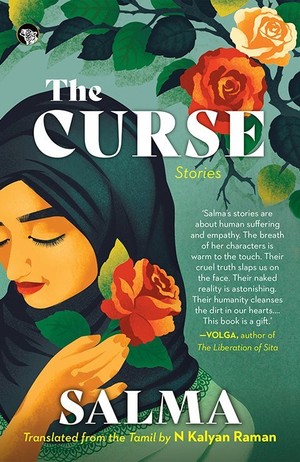
For my Tamil Nadu read, I picked Salma’s The Curse.
I had heard so much about Salma before I came to read this book, and I think all the praise is well justified. The Curse is a collection of short stories about Muslim women in small town Tamil Nadu. And Salma gets up close and personal, graphic, discomfiting, but always believable.
Of all her stories, I think the one that will stay with me is ‘Toilets’. If you are a woman living in India, learning how to pee in public bathrooms or how to hold your pee while travelling long distance are important life lessons. While these adjustments come with the risk of urinary tract infections or more, in poorer pockets of urban India and in rural India, open defecation is still a thing and just answering nature’s call can expose you to the risk of rape/sexual harassment. Salma gets really graphic in this story and while it makes for uncomfortable reading, it feels terribly real. And Salma reminds us, powerfully, in this story that it is not merely infrastructure that cramps women but also patriarchy: women shouldn’t be heard urinating; women must not be seen carrying menstrual rags. We are taught in so many different ways to be ashamed of our bodily functions that it is not surprising that we develop unhealthy habits and phobias. And of course, the fact that women’s needs are secondary to those of men in most patriarchal structures.
Another story that I really liked was ‘The Orbit of Confusion’. Female, especially mother-daughter, relationships is a theme that recurs in Salma’s stories (On The Edge is another one). And ‘The Orbit of Confusion’ takes a deeper look at this. It is a complex, thought-provoking tale that made me reflect on some uncomfortable aspects of my relationship with my mother as well.
All of Salma’s short stories carry a feeling of intimacy, of a close, unvarnished look at the lives of women. And the translation by N Kalyan Raman makes for fluid reading.
All in all, an engaging collection.
Do you read to escape reality or do you read to get a taste of reality?
Because The Curse Stories by Salma, translated by N Kalyan Raman, is one book which will unapologetically give you the latter. These stories shows the strength of Salma’s writing, the way she turns ordinary lives of ordinary women into extraordinary tales of identity, gender and self discovery. Some long some short, these stories give you deep insight into the lives women live everyday, the shame and helplessness that has become synonymous with being a woman in a deeply patriarchal society.
Salma’s stories bring to the forefront topics ranging from abortion, the hush surrounding menstruation, the lack of proper toilets and the relationship between mothers and daughters. Even though the women in these stories live a burdened life by the sole virtue being born women, Salma through her matter-of-fact narration and unflinching words rises above the shame and gives us characters whose “humanity cleanses the dirt in our hearts” and a book which is truly a gift.
Women fight various battles, against injustices, hypocrisy, to have equal footing and to have a place for themselves. But little did we know that there are women who are not even allowed to go to toilet when men are around, forcing them to hold it till they end up being sick, let alone having aspirations and dreams.
The Curse by Salma is a collection of 8 short stories that talk of the lives of Muslim women of rural Tamil Nadu. The stories are such that, though based on Muslim society , it would evoke sheer familiarity as they revolve around everyday mundane lives and the angst women face on a daily basis.
My favorites have to be "Childhood", "Toilets", " The Curse " and " The Orbit of Confusion". In 'Childhood' a woman has to undergo physical and mental torment, owing to the societal pressure of girls getting married off at an early age. In 'Toilets' Shamim, the protagonist, recalls how toilet has been so hostile to women and accessing to it is an everyday struggle. Anguish, distress, hostility, anxiety - that is how Shamim associate herself to toilet. I was flabbergasted to learn about how women are denied to such a basic necessity !! The story also touches upon manual scavenging and struggles of menstruating women too. In 'The Orbit of Confusion' a daughter writes a letter to her illiterate mother, describing her conflicting emotions of anger, hate and love for her mother. In the titular story ''The Curse, the women of a household seemed to be cursed by the past sin committed by its men. The strange part is that the curse befalls on the women only after they are married. Is it a curse or are the men who they are married to have a role to play?
Salma's writing is very sharp. She lays bare the issues that exist around women and openly bash about it. Her story telling is a powerful one indeed.
Much recommended. Do read it.
This book may tell true, resonant stories about the lives of women, but the ungainly use of present tense, and the stilted, awkward sentences made it impossible for me to dive in. These feel like the works of a very new writer who still has a lot to lean about style, pace and clarity
This translator has produced other texts I've enjoyed. I suppose it's Salma's style I'm unable to enjoy.
What a terrific book this is! Salma is 🔥
Salma’s writing is a sharp reminder of how women fight various battles in their lives that leave them battered and weighed down with having to conform, battles where they must fight one another because they cannot ever dream to have a place for themselves. These 8 short stories will grasp at you with brute force and leave you gasping for breath with the taut depiction of the inner world of women who are cloistered and kept on edge.The stories revolve around the lives of Muslim women but have almost an intimate familiarity that speaks to you.
Staring with the first story, which pits the women in a family against one another, each with a set of what might look like eccentricities but in reality are the physical manifestation of repressed hurts and pain in their lives to Trap, the shortest story of the lot that peels off layers of anxiety and uncertainty that women who have no agency in their lives face, the author bares the roiling of women who are left to fend for themselves. The title story works on various layers: the cross that women across generations bear for the mistakes committed by man, when belief systems can impair everything in life to the point of not being able to recognize goodtimes.
Toilet is another story that goes into a detailed narrative around awoman’s basic bodily needs and one that will speak to most women in this country. I definitely have a lot to say about each of the stories in this collection (longer review on my blog soon).
"There can always be many reasons for a father and son to be at loggerheads. So much of this is common knowledge. But a daughter is totally incapable of opposing her mother. This is true of all daughters and the reason is not such a secret. Girl children find it hard to hate a mother who is already being humiliated by their father. For them, it's simply unthinkable. Growing up in the constant company of their mothers, daughters see how oppressive the domestic spaces to which a mother is confined can become. They see their mothers wander listlessly, weep in despair, shrink from humiliation, and impound themselves within those spaces. Sometimes, daughters also witness the strange sight of their mothers marvelling at and admiring themselves. So I believed that daughters could not ever, at any time and in any situation, hate their mothers...till you turned Sharmila out of our house."
This extract from the last story in the book sums up the wit and wisdom of the collection of short stories. Tamil author and poet, Salma, wrote about the life she and countless other women like her live. She's a victim not of poverty, but of a patriarchal society that places unnecessary restrictions on women. Women are forced to navigate almost claustrophobic physical and mental spaces. And they often end up hitting out at other women to make themselves feel a little better.
'Toilets' was perhaps the most intimate story because even the simple act of using the toilet becomes an adventure sport for most women in the country. My personal favourite was 'Black beads and Television' because I loved how the women you least expect would assert her agency proceeds to make a choice that seems ridiculous to everyone else but which gives her joy.
• r e v i e w •
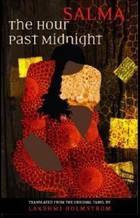
The Curse by Salma was originally published in 2012 but the newest edition in English includes few stories from the previous book including other works by her. Kalyan Raman has done a brilliant job in translating these stories, managing to keep the essence of them intact. I read Women Dreaming by Salma couple of months ago which spoke of Muslim women trapped in patriarchal homes and when I began reading The Curse Stories, a similar theme emerged from the stories. Salma's writing carries an honesty that comes rarely in other works, the sort of realness that forces the readers to pause and think. These stories capture women who struggle for basic freedoms, their wings clipped and forced into cages. If you're planning to discover a new author this year, let it be her.
This book encloses eight short stories, each powerful as the previous one. My favourite was undeniably 'Toilets', which focuses on how women are denied basic amenities leading them to be prone to health problems. The disposal of menstrual rag can create such dilemma that their cheeks burn with shame. Second favourite was 'The Orbit of Confusion' in which a daughter addresses a letter to her mother which is bubbling of anger, hate and love. It portrays conflicted feelings between a mother-daughter duo. In 'Childhood' a woman faces her past love and reminisces of the times when she was sure of marrying him. While men were pushed to study more, girls were forced to marry quite early. Amidst these favorites were other stories that revolved around women, unlucky and disgruntled by the rules set by the society. Salma is unabashedly open about voicing her opinions when it comes to talking about desires of women and demands people to normalise it. To shed away anything remotely taboo surrounding these simple pleasures. I will certainly read more of Salma and maybe you should too.
Rating : 4.3/5.
Thank you for the copy @speakingtiger 🌸
4.5*
*TW for this review: mention of violence against women and the despair patriarchy leaves you with.
Women telling women's stories has got to be my most favourite genre.
Translated from Tamil, this book has eight short stories that depict the lives of Muslim women. The stories speak of the everyday angst and anguish that women undergo, almost stoically, a classic case of resilience by force and not by choice.
Countless women have to undergo unspeakable behaviour only because society does not allow them any power, refusing to treat them as equals. It is so sad that reports of crimes against women still appear on the front pages regularly. There is so much pain, so much despondency, the feeling of utter helplessness and no power.
Take the past few days. I had one day to feel relieved when Priya Ramani, a strong voice for the #MeToo movement in India was acquitted on charges of defamation. It wasn't even a case of a perpetrator being brought to justice, it was the case of a woman who was NOT punished for speaking out against sexual harassment - for herself and in support of other women. People might say that one should not celebrate over something so basic. But I know that countless other women, just like me, saw this as a victory - especially during one of the darkest days of Indian judiciary. I had tears in my eyes while I was reading the judgment when I was seeing other women celebrate. The sisterhood, the solidarity, we all had a reason to feel like not all is lost. Just the next day, the Unnao news happened again. And I find it so hard to find hope, yet again.
I know it seems like I digressed from talking about the book, but in a way, I was talking about the feelings that this book evokes. Stories of women who are forced to live a sub-par life, to the extent that their physical health is affected - be it due to the inaccessible toilets, early marriage, lack of planned families, and the list goes on. I could not help but marvel at the powerful narration throughout the book. It is not easy to show the power of the oppressed when everything is so bleak, but Salma managed to do that exactly in this book. It is harsh when it needs to be, exposing the injustice that has become an inherent part of the women's lives and how much pain it brings. The stories will stay with me for a long time, almost as an act of defiance and solidarity.
All the stories were full of layered insights and vivid imagery, but the last one - The Orbit of Confusion has a special place in my heart. There was a line that said And for some reason, I cannot stop thinking about this line.
Please read this book. I only wish I could read the book in its original text. If only!
"In the truths that grate on my mind, I experience, even today, many moments when I plunge into melancholy. Like our doubts, our depressions are also profound. Moving past them is like going up a one-way street. I encounter mine, nearly always, in a helpless state. Like a nightmare stuck fast with glue in the depths of my mind, it refuses to leave me."
RATING: 4.75/5
A month ago, I had zero idea that Salma would become one of my favourite Indian writers. I read and reviewed her new novel, recently out in an English translation done by Meena Kandasamy, only last week. I had liked it a lot but little did I know at that point just how much more she would shine in these brilliant short stories. I was completely enthralled, to say least. I did not expect to love them so much. I am yet to draw up a final best fiction of the year list but this has a very strong chance of appearing on it. If not there, then definitely in the honourable mentions. I have a hard time really liking Indian translated fiction because it tends to be socio-realist and the language is usually simple. While Moustache was an exception I didn't like it for other reasons. Salma's prose maybe straightforward, but her imagination is unmatched.
The Curse was first published in 2012 and is different from this English version. N Kalyan Raman, who has done an absolutely superb job at translation, picked three stories from the original collection and has included five Salma's later stories, making a total of eight in this 'new' collection. He points out her use of a "direct and forceful style" in her fiction and poetry. In my view, it is exactly this that which makes her writing so evocative and effective. I also have to point out the sheer originality in her plots.
"On the Edge" follows two elderly women who despise each other on a doctor's trip and an uncomfortable car journey. "Trap" is about a woman paralysed with anxiety, afraid of late night visitors with dire messages, and can't sleep. "The Curse" delves into a dark family history manifesting as madness in the women soon after their marriage. "Toilets", delightfully scatological, has a woman recount how access to such a necessary thing was regulated all her life. In "Black Beads and Television", a woman gets drawn in by the lure of TVs with disastrous results. "Childhood" is about a prematurely married woman with kids rethinking her past and the roads not travelled. In "Atonement" past mistakes come in the form of recurring dreams and ghostly visitations. Finally, "The Orbit of Confusion" is structured as a letter from a daughter to her mother that explores the complicated feelings in a familial bond.
Salma acutely foregrounds body politics and feminine interiority in her stories. Women are always at the centre, their bodies intertwined in discourse around religion, freedom, desire, pleasure, and shame. She does not shy away from things others might deem indecent and wrong Salma's writing is unconventional and subversive in the way she interrogates social norms and regulations, questions orthodoxy. Her richly realized characters carve out a life for themselves, working within the limits set on them and always stretching their bounds. I am very glad that I managed to read two of her books this year. I will be getting myself a copy of her debut novel as soon as possible & I eagerly await whatever she writes next.
Take a step back and think about women in India. Nope, I am not talking about unsafe streets, or evil eyes following our every move. Picture a household, run by women and governed by men, their way of living dictated by men who are incapable of understanding the ailments and trauma women have to go through, because of their ways.
.
'The Curse' by Salma (Translated from Tamil by N Kalyan Raman) holds close to its bosom, 8 stories of Muslim women from Tamil Nadu. These women are rendered powerless by the men, faced with restrictions that eventually hurt them physically and mentally. In 'The Trap', a women deals firsthand with crippling anxiety, only to be branded as a nagging soul. 'The Curse', also the title of this collection, makes us privy to the curse laid on a family due to one man's actions, one that forces her to confront her family's tragic past and her disenchanted present.
.
'Toilets' tell us how a simple room, at the rear end of the house' is essential for survival. Women are forced to hold their pee, or struggle during menstruation and pregnancy, a luxury inaccessible to women because they are not supposed to talk about it or indulge in these basic activities in front of men.
.
Contrary to the above mentioned stories, 'The Orbit of Confusion' is a letter to her mother, by a daughter who resents her for her actions, actions that are a byproduct of her troubled marriage.
Salma's stories emerge from everyday situation, her characters are a direct reflection of our collective experience. The writing is direct, harsh and poignant, one that will make you want to hop from one collection to another.
4.5 stars
Loved these stories. Curse holds eight stories—Salma’s women come from Muslim households in Tamil Nadu. Some fav:
On the Edge - an elderly woman cannot stand another one (who doesn’t bathe, eats like a glutton and also farts in car). She doesn’t want to sit next to her in a car journey but the ending is too sad.
- explores fear; a woman can’t sleep.
is a shocking, heart breaking story about a girl full of dreams and her wedding night.
- a woman who loves watching TV and a story about buyinh TV
- such a difficult, heartbreaking read. About women and the societal restrictions imposed on them from a young age about going to toilet. My eyes filled up at so many portions. It makes you think about access to toilets and public toilets, menstrual restrictions because of having to hide things and how a natural bodily function is seen as something unfeminie. A five star story.
I want to read everything Salma writes after this. Tranl by N. Kalyan Raman is good and strikes the right chord.
For more about Salma's books, you can read my thoughts
| | | |